

9 June 2011 - 15:39Weiner roast

So the jokes have been funny, the response stinging (and deservedly so) and the fall-out a 24/7 TV festival. But is there anything to say about Weiner-gate that hasn’t already been said? Possibly not. But here’s the takeaway we have, as PR professionals. It was very interesting to see the frozen-in-place reaction that Weiner’s pr staff had when biggovernment.com started reeling out the compromising photos online on Monday. As the compromizing pixels piled up, staffers did nothing, because they didn’t know what to do.

Now Monday morning quarterbacking is super easy (and fun). So it may well be that his staff were ready, but hogtied and prevented from acting. But I’d like to think that, had our team been on the job, we’d have been prepared to respond in some way. Why?

Because there’s one really important service a pr person can play for their client/employer. They can refuse to drink the Kool-aid. And in refusing, they can also allow their minds to imagine the absolute worse, and prepare accordingly. One wonders, then, if the loyalists on the Rep’s team were so trusting of him that they refused to consider a plan that might work, should the unthinkable occur. Which it did.

Every time we write, revise, review a crisis plan, we hope that while we’ll be ready, we’ll never have to implement. Sure, Weiner’s staff hoped they were working for an honest guy. But somebody should have had enough cynicism in them to be ready for anything Brightbart had. Perhaps they were. And perhaps the incredibly compressed timeframes of the social media world prevented any good response.

But it’s always worthwhile for us PR folks to watch these big stories unfold and ask ourselves: what would I do if this were my client? Someday, it just might be!

No Comments | Tags: Industry news, social media
30 May 2011 - 9:00We’re still big on blogs

In addition to positioning their authors as thought leaders, blogs have other positive qualities. We love their Google-worthiness. Touchpoint has recently helped two clients launch their new web logs, and we’re delighted to see them developing a loyal following AND improving their SEO.

Darryl Cobb of Charleston-based Cobb Architecture is musing about great design on his architecture-oriented blog.

And Sean McLernon, CEO of STEALTH, is taking a leadership role in the wireless industry with his frequent posts, videos and links to all things “concealment” on the STEALTH blog.

No Comments | Tags: People and places, social media

20 May 2011 - 15:15Check your social media “expertise” at the door!

Raising a glass to Peter Shankman today, who just wrote a very cogent treatise on why anybody who claims to be a social media expert should be shown the door.

Why? It’s like saying: “I’m applying for this marketing job because I’m really good at writing headlines.” Oh sure, headlines are important. But what about all the other stuff that goes into creating and executing a winning marketing plan. Social media - like headlines - is only a part of it. Doing it well is important. Understanding the rules is key. Check out Peter’s take. Then share yours!

No Comments | Tags: Industry news, social media

23 September 2010 - 11:17Social Media Tips From a PR Pro

Looking for advice on how to establish and maintain a successful social media campaign? This interview with new media guru Brian Solis just might be your answer. For similar clips and stories, click here.

No Comments | Tags: Industry news, social media

16 September 2010 - 12:58The Allure of Facebook

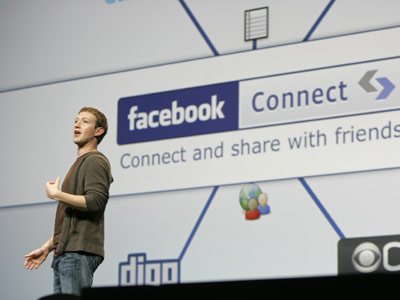
Like a moth to a light, many individuals today (500 million-many, to be exact) are drawn to Facebook by a seemingly inexplicable desire that is nearly insatiable. Whether it’s our curiosity, our free time, or our overwhelmingly extensive access to online information that drives us to check our accounts compulsively, one thing is certain: people love Facebook. Below are links to our favorite explanations for this undeniable attraction.

Photo courtesy of Business Insider

1. “It’s like watching a reality TV show, except you know all the characters..” (Twenty Reasons Grown-Ups Like Facebook)

2. “Nostalgia.” (Twenty-One Reasons to Love and Hate Facebook)

2. ”Forget Facebook. Eighty million of you are addicted to Zygna’s Facebook game, Farmville.” (Ten Reasons You’ll Never Quit Facebook)

What keeps you logging in? We’d love to know!

No Comments | Tags: social media

21 August 2010 - 9:32Social Media Monopoly

If social media were a game, the folks at The Big Picture think it would look a little something like this..

Image Courtesy of ritholtz.com

It seems fitting that Facebook (with its 500 million users and recent launch of the Facebook Places app) is the original Monopoly’s Park Ave equivalent and Wikipedia is Free Parking. Touche, Mr. Ritholtz. We’ll take two, please!

No Comments | Tags: social media, Weird & wild

13 August 2010 - 10:25The ABC’s of Internet Lingo

With the influx of social media over the last several years has come a laundry list of new terminology. In today’s internet-centric society, you can “google” the answers to your questions, “friend request” your acquaintances, and “tweet” your everyday thoughts. You can “LOL” when someone tells you a joke, “inbox” a message you want to keep private, and “follow” your friends and favorite celebrities. It is said that on June 10, 2009, the English language even passed the “million word threshold” when the term “Web 2.0″ became officially recognized. So how can you keep up?

Fortunately, along with the increase in verbiage has come an increase in online and street-slang dictionaries, as well as a number of tutorials on how to put the terms to use in the context of the social media from which they were derived. Below are our favorites.

1. A Guide to Internet Lingo and Emoticons. This one is old school. Remember the days when the internet was called “The Net” and you were still learning how to send “electronic-mail”? This is a tutorial from then. Here’s a taste: “:) is one of the most popular emoticons, used to represent a smiley face. If ‘:)’ still doesn’t make sense, tilt your head to the left.” Love it.

2. How Do I Facebook? A non-Facebook endorsed (but dead-on) glossary of Facebook terms from “admins” to “news feeds” to “pokes.”

3. Twitterspeak. Posted on Mashable.com, this list is incredibly thorough and even touches on some terms we hadn’t heard of. “Tweepish,” “tweetheart,” and “twideo-cronicity” all make the cut.

4. Twitter Terminology 101. For those looking to set up a Twitter account, not rule the world with it.

5. LinkedIn Glossary. A list of terms for employees and employers looking to network in a professional setting, this site explains the varying degrees of “connections” and the difference between an “InMail” message and an “OpenLink” one.

Happy studying, everyone! Quiz is Tuesday.

No Comments | Tags: social media

7 August 2010 - 10:40Surprising Social Media Stats

There’s a lot of hubbub these days about the increasing ubiquity of social media, but the following statistics will bring your understanding of this media form’s depth of reach to an entirely new level. Danny Brown, a social media and marketing consultant and partner at Bonsai Interactive, recently compiled a list of 52 facts (one for each week of the year) about the five most well-known social media outlets—Facebook, Twitter, LinkedIn, YouTube, and RSS. Here’s a taste:

1. More than 25 billion pieces of content (web links, news stories, blog posts, notes, photo albums, etc.) are shared on Facebook each month.

2. There are more than 100 million active users currently accessing Facebook through their mobile devices (and they’re twice as active as non-mobile users).

3. More than 300,000 new users join Twitter every day.

4. Twitter receives 180 million unique visits each month.

5. There are more than 70 million LinkedIn users worldwide, coming from over 200 countries and covering every continent.

6. Eighty percent of companies use LinkedIn as a recruitment tool.

7. To watch all the videos currently uploaded on YouTube, you’d need to live over 1,000 years.

8. YouTube receives more than 2 billion viewers per day.

9. Seventy-seven percent of internet users read blogs, and the leading blog directory lists over 133 million unique blogs.

10. Corporate blogging accounts for 14 percent of all blogs.

Those should get you almost through October, but for more social media statistics and Brown’s complete list, click here.

No Comments | Tags: social media

2 August 2010 - 11:55Free Microblogging or Bust

A recent study by USC’s Annenberg School for Communication and Journalism found that while nearly half of all Americans have used free microblogs like Twitter, a whopping ZERO percent of them would be willing to pay for them. Not exactly good news for startup companies hoping to launch subscription-based networking sites. Or for existing sites looking for alternatives to advertising as a revenue stream.

“Such an extreme finding…underscores the difficulty of getting Internet users to pay for anything that they already receive for free,” Jeffrey Cole, director of the Center for the Digital Future at USC, explains. ”Twitter has no plans to charge its users, but this result illustrates, beyond any doubt, the tremendous problem of transforming free users into paying users.”

What else was discovered in the study? That 70 percent of Internet users find online advertisements “annoying,” for one. And 50 percent claim never to click on such advertisements. For internet startups and old hats alike, this means that an inventive and consumer-friendly solution is crucial for solving the wicked problem web apps have of attaining both fortune and fame.

“Beginning with our first Digital Future Study in 2000, and in every year since, we have found extraordinary levels of shifting views, new and evolving attitudes about technology, adoption of new media, and casting off of old methods as part of involvement – or not being involved — in the online experience,” Cole has said. So where will the virtual world turn next? Can you keep up?

No Comments | Tags: social media, Uncategorized

25 July 2010 - 12:49Keeping Your Tone in Check

According to a study published by the Journal of Personality and Social Psychology in 2006, approximately 50% of all emails are incorrectly interpreted by their intended receiver. “Why,” you ask? Apparently, because of the sender’s tone. Despite my qualms with accepting such seemingly precise data regarding the imprecise act of subjective interpretation, I find the study’s conclusion—and the company aiming to bring it to the public’s attention—intriguing. There’s no denying that we’ve all read an email or text message that’s caught us off guard with a questionable tone, and there’s no denying that messages we’ve sent ourselves have been received in the same manner. After all, the written word is subject to interpretation in a way far unlike the oral one. Enter ToneCheck.

The latest of a string of communications solutions developed by Lymbix, ToneCheck touts itself as an “emotional spell-check” that “helps end users improve the clarity of their communication.” It gauges words and phrases against several levels of “connotative feeling,” provides feedback, and thus helps to identify whether the receiver of that message will interpret it in the manner that the sender intended. Skeptical? So are we. But it’s free and easy to download, so if you’ve got Microsoft Outlook—which the product requires you use—then give it a shot. And let us know what you think. We’d love hate like be interested to learn.

No Comments | Tags: social media